
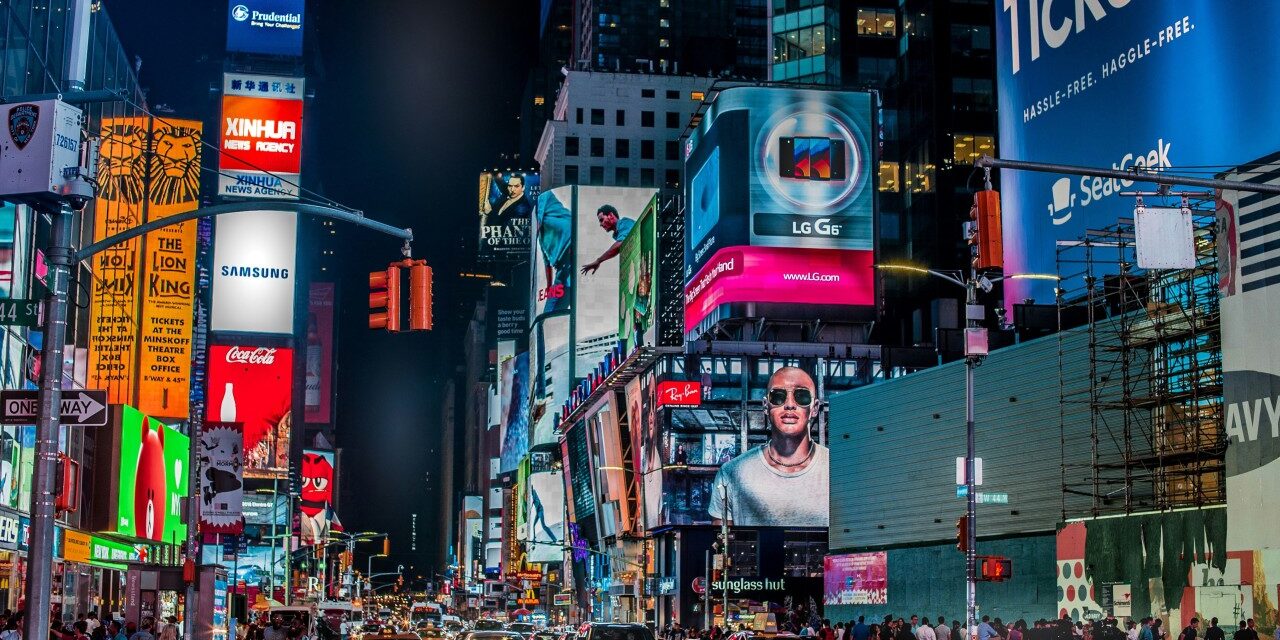
Getting noticed is harder than it used to be. Your customers scroll past ads on their phones, skip commercials, and ignore most of what lands in their inbox. They still drive, though. Outdoor advertising reaches people on the way to work, school, and the store, and digital billboard advertising gives you more ways to make that moment count than a printed board does.
Here’s how digital billboards compare to traditional static billboards, and where each one fits.
Digital vs. static billboards at a glance
| Static billboard | Digital billboard | |
|---|---|---|
| Messages per location | One | Several, in rotation |
| Changing the ad | Print new vinyl and schedule an install | Upload a new file |
| Timing | Same message for the whole campaign | Can change by day, season, or event |
| Cost to change creative | Printing plus labor | Little to none |
| Best for | Long running brand or directional messages | Promotions, events, and frequent offers |
1. Motion and color grab attention
A static billboard shows one image for the whole campaign. That can work, but it’s easy to stop seeing a board you drive past every day.
Digital boards use bright, backlit screens and rotating creative, so the display changes while people are looking at it. You can run seasonal graphics, promotions, or a few versions of the same ad to keep your brand from going stale.
One rule doesn’t change: drivers get a few seconds at most. Stick to one idea, a short headline, and big text. A cluttered digital ad gets ignored just as fast as a cluttered printed one.
2. Change your message without changing the billboard
With a printed board, a new message means new vinyl, an install crew, and the bill for both. With a digital board, you send a new file.
That makes it easy to react. Running a weekend sale? Launching a new product? Have a limited time offer? Update the ad and it goes into rotation.
A car dealership can feature new vehicle offers during the week, promote a weekend sales event on Friday, and swap in a new incentive the day the manufacturer announces it. A restaurant can push lunch specials. A retailer can switch to holiday offers once the season starts.
3. Run more than one message from one location
A static billboard usually carries one main message. A digital board can rotate several of your ads within your approved schedule, so you don’t need a separate board for every message.
That same dealership could rotate three ads: the monthly sales event, a specific model, and its service department’s reputation. Each one does a different job, and together they tell a fuller story.
Rotation length and the number of ads you can run depend on the billboard operator and your contract, so ask about both before you sign.
4. Match your ad to what’s happening right now
A timely message beats a generic one that runs untouched for a month. Digital boards let you line up your creative with holidays, local events, promotions, and even the weather when the operator supports it.
Think back to school ads in August, a holiday sales event in December, or a countdown to a festival in town. When the ad matches what people are already thinking about, it sticks.
5. It works with the rest of your marketing
A billboard shouldn’t work alone. When the same offer shows up on the road, in search ads, on social media, and on your website, people recognize it faster and remember it longer.
Digital also gives you room to adjust. If one offer is pulling better online, you can move it onto the billboard. That doesn’t guarantee better results, but it gives you more to work with than a board that’s locked in for the whole campaign.
6. Less printing and installation
Every change to a static board means printing a new ad and sending someone up to hang it. Digital skips that step, which cuts material waste and makes updates simple.
It isn’t free. You still pay for media time, and the screens use power. But if you change promotions often, the savings in time and production add up.
When a static billboard still makes sense
Static boards still have their place. If your message never changes, like your brand name, your location, or “exit here,” a printed board keeps that spot yours around the clock without sharing the screen with other advertisers. For long running awareness campaigns, that’s a real advantage.


Frequently asked questions
Are digital billboards more expensive than static billboards?
It depends on the market and the operator. Digital media time can cost more per location, but you don’t pay to print and install a new ad every time you change it. If you plan to update your creative often, compare the total cost of both options.
How long does an ad show on a digital billboard?
Most operators show each ad for about 6 to 10 seconds in a rotating loop with other advertisers. Ask your operator for the exact spot length and how many ads share the loop.
What makes a good digital billboard ad?
One message, a short headline, high contrast colors, a clear logo, and a simple next step like a website or “exit now.” If a driver can’t get it in a glance, cut it down.
The bottom line
Static billboards are still good at one thing: putting the same message in the same place for a long time. Digital billboards add flexibility. You can rotate ads, update offers quickly, and keep your creative fresh without reprinting anything.
Being seen is the easy part. Being remembered is what pays. Whether you’re promoting a local business, launching a product, or filling the lot for a sales event, digital billboard advertising helps you put the right message in front of drivers at the right time.
Ready to see what digital billboards can do for your business? Talk to our team about locations and availability in your area.


